Retained earnings are calculated by adding net income to the previous period’s retained earnings and subtracting dividends paid. This component reflects a company’s profitability and its ability to sustain operations over time. Companies with strong retained earnings are often viewed as financially stable. Although APIC is an important element of the shareholders’ equity formula, it is not universal. APIC happens only when investors purchase shares by directly approaching the company issuing such shares. When an investor pays more than the stock’s face value during an IPO or Initial Public Offering, it is classified as APIC.
Components of Shareholders Equity
Some view the legal unearned revenue complexity of starting and running a corporation to be a disadvantage. To incorporate, an application must be filed with and approved by one of the fifty states, and once approved, the corporation must comply with that state’s regulations. In contrast, a sole proprietorship can be started in minutes, sometimes with nothing more than opening a business checking account. Many of the legal requirements imposed on a corporation do not apply to sole proprietorships. A company may refer to its retained earnings as its “retention ratio” or its “retained surplus.” You can find the APIC figure in the equity section of a company’s balance sheet.

Table of Contents
- The amount of cash received from investors who bought equity stocks in the company, less any dividends paid to shareholders, is shown as shareholder’s equity on the balance sheet.
- Because laws differ somewhat from state to state, accounting for corporations also differs somewhat from state to state.
- In exchange for the preferential treatment of dividends, preferred shareholders usually will not share in the corporation’s increasing earnings and instead receive only their fixed dividend.
- Many of the legal requirements imposed on a corporation do not apply to sole proprietorships.
- The sum of the company’s liabilities is the next component of the equation.
- Total liabilities are obtained by adding current liabilities and long-term liabilities.
It stands for an accounting value that is distinct from the market value or actual value of a corporation. Actual equity value or equity book value is both examples of total equity. In order to assess total solvency, loan holders are therefore not overly concerned with the value of equity beyond the basic level of equity.

What is Stockholders Equity?
Shareholders of a company are typically interested in the company’s shareholder’s equity, which is represented by their shares. The shareholder’s equity is dependent on the total equity of the company. Thus, a shareholder concerned for his earnings gym bookkeeping will also be concerned for the company. The equity Formula states that the total value of the company’s equity is equal to the sum of the total assets minus the total liabilities.
- Although the 2-for-1 stock split is typical, directors may authorize other stock split ratios, such as a 3-for-2 stock split or a 4-for-1 stock split.
- In accounting for share-related transactions, a few more phrases are crucial.
- The simplest and quickest method of calculating stockholders’ equity is by using the basic accounting equation.
- If a corporation purchases a significant amount of its own stock, the corporation’s earnings per share may increase because there are fewer shares outstanding.
- In 2018, Company PQR’s total assets would be $17.8 million, while its accrued liabilities would be $5.6 million.
- A negative shareholders’ equity means that shareholders will have nothing left when assets are liquidated and used to pay all debts owed.
- Shareholders equity is the residual interest of a company for its assets which has been prorated for liabilities.
Company equity is an essential metric when determining the return being generated versus the total amount invested by equity investors. For example, return on equity (ROE), which is the company’s net income divided by shareholders’ equity, measures how well a company’s management is using equity from investors to generate profit. Company or shareholders’ equity can be determined by calculating the company’s total assets and liabilities.
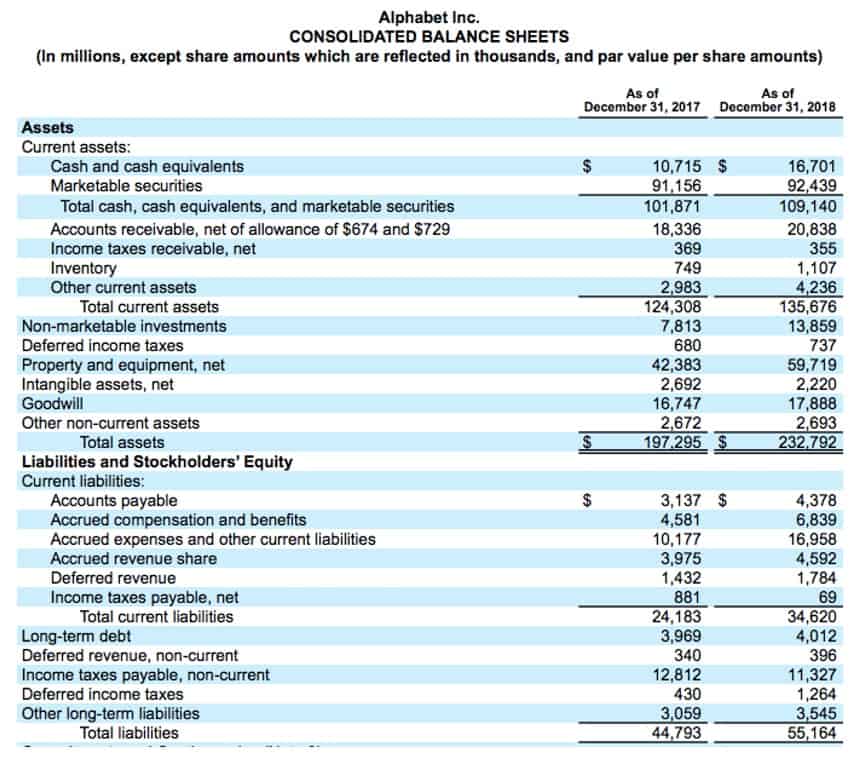
The formula to calculate shareholders equity is equal to the difference between total assets and total liabilities. What remains after deducting total liabilities from the total assets is the value that shareholders would get if the assets were liquidated and all debts were paid up. The above formula is known as the basic accounting equation, and it is relatively easy to use. Take the sum of all assets in the balance sheet and deduct the value of all liabilities. Total assets are the total of current assets, such as marketable securities and prepayments, and long-term assets, such as machinery shareholders equity equation and fixtures. Total liabilities are obtained by adding current liabilities and long-term liabilities.

Net income over the last full fiscal year is found on the income statement—a sum of financial activity over that period. Shareholders’ equity comes from the balance sheet—a running balance of a company’s entire history of changes in assets and liabilities. Shareholder’s equity also helps in determining the ROE (Return on Equity) ratios, indicating how effectively a company generates returns with its share capital. So, it is an indispensable factor present in the balance sheet that gives a comprehensive idea of a company’s financial well-being.
The Exit Planning Methodology That Will Position Your Business for a Premium Sale
It should be paired with other metrics to obtain a more holistic picture of an organization’s standing. Shareholder equity is the difference between a firm’s total assets and total liabilities. This equation is known as a balance sheet equation because all of the relevant information can be gleaned from the balance sheet. If we rearrange the balance sheet equation, we’re left with the shareholders’ equity formula. This account is then closed to the owner’s capital account or a corporation’s retained earnings account.
- Ever wondered how much cash you as a shareholder would get if a firm was dissolved, all of its assets were sold, and all debts were settled?
- Because shareholders’ equity is equal to assets minus liabilities, ROE is essentially a measure of the return generated on the net assets of the company.
- The balance sheet presents a snapshot of a company’s financial position at a specific point in time, listing its assets, liabilities, and shareholder equity.
- Shareholders’ equity means sources of ownership in a company—means total assets minus total liabilities.
- A current liability account that reports the amounts of cash dividends that have been declared by the board of directors but not yet distributed to the stockholders.
Shareholders’ equity and book value are synonymous but are employed in various ways. Shareholders’ equity may be interpreted by one investor as the company’s book value of equity and as a gauge of the company’s value if it were to be sold. To assess a company’s value, another investor can look at elements of shareholders’ equity such retained earnings. The statement gives shareholders an overview of the company’s performance. It is also utilized by third parties like lenders who want to know if the business is performing its debt obligations and maintaining minimum equity levels. Both current assets and non-current assets can be included in total assets.